Shaoxing Shangyu Flight Seiko Machinery Co., Ltd. (FTM), drawing upon our deep expertise in high-precision and non-standard bearing manufacturing since 2006, extends this commitment to quality through our Precision Castings division. We specialize in the design, manufacturing, and customization of precision castings, expertly tailored to meet the most demanding requirements of modern, high-stakes industries globally.
The Investment Casting Advantage: Unlocking Intricate Geometries
At the core of our offering is the investment casting process (also known as the lost-wax process). This advanced manufacturing technique is highly valued for its ability to produce parts with unparalleled accuracy and outstanding material efficiency. It is a cornerstone technology for critical applications across sectors like aerospace, automotive, medical, fluid control systems, and complex industrial equipment.
The process chain ensures superior component integrity:
- Wax Pattern Creation: A highly detailed, dimensionally accurate wax pattern is produced, often via injection molding.
- Shell Building: The pattern is repeatedly dipped into a ceramic slurry and stucco material, creating a robust, high-quality ceramic shell.
- Dewaxing: The wax is melted out (lost) in an autoclave, leaving a precise mold cavity.
- Pouring: Molten metal (including ferrous and non-ferrous alloys such as stainless steel, carbon steel, and specialized superalloys) is gravity-poured into the preheated ceramic mold.
- Finishing: The ceramic shell is broken away, and the final component undergoes necessary finishing operations.
This method is uniquely suited for components requiring intricate geometries, thin walls, and exceptional surface finishes, often eliminating the need for extensive secondary machining and reducing overall manufacturing costs.
FTM Manufacturer Advantage
Drawing from more than 30 years of technical design experience, FTM’s precision casting division offers distinct advantages:
- High-Precision Customization: Our core competency in non-standard and high-precision machinery translates directly into our casting capabilities. We excel at customizing complex components that meet stringent dimensional tolerances, often serving as import substitutes for critical applications.
- Material and Alloy Expertise: We possess deep knowledge in working with a vast range of high-performance alloys, ensuring the chosen material provides optimal mechanical properties (strength, hardness, corrosion resistance, heat resistance) for the intended application environment.
- Integrated Engineering Solutions: Our professional technical team can provide comprehensive solutions, from initial component design and material selection to final quality verification, ensuring seamless integration into your overall machinery or system.
- Superior Surface Finish: The investment casting process inherently yields excellent surface finishes , significantly minimizing post-casting work.
Frequently Asked Questions (FAQ)
-
What is the maximum part size you can cast?
FTM specializes in medium to small complex castings, though the exact size limitations depend on the required tolerance, material, and component geometry. We encourage customers to submit their detailed specifications for a technical review.
-
Which materials are commonly used in FTM’s precision castings?
We routinely work with stainless steels (e.g., 300 series, 400 series), carbon steel, low-alloy steel, nickel-based alloys, and other specialized ferrous and non-ferrous materials tailored to the application’s demands for strength, temperature, and corrosion.
-
What are the typical tolerance capabilities for investment castings?
While tolerances vary by dimension and alloy, investment casting typically achieves tolerances in the range of ±0.005 inches per inch (±0.127 mm per 25.4 mm), which is significantly tighter than sand casting. FTM strives to meet the tightest commercially achievable limits for critical features.
-
Can FTM assist with the design of a component for castability?
Absolutely. Our engineering team provides Design for Manufacturability (DFM) support, helping customers modify part geometry to maximize the benefits of investment casting, improve yield, and reduce cost.
-
How does investment casting reduce overall component cost compared to machining?
Investment casting reduces cost by achieving near-net shape production. This minimizes material waste and significantly reduces or eliminates the need for expensive, time-consuming machining operations, especially for components with complex internal features or curves.


 English
 中文简体
中文简体 عربى
عربى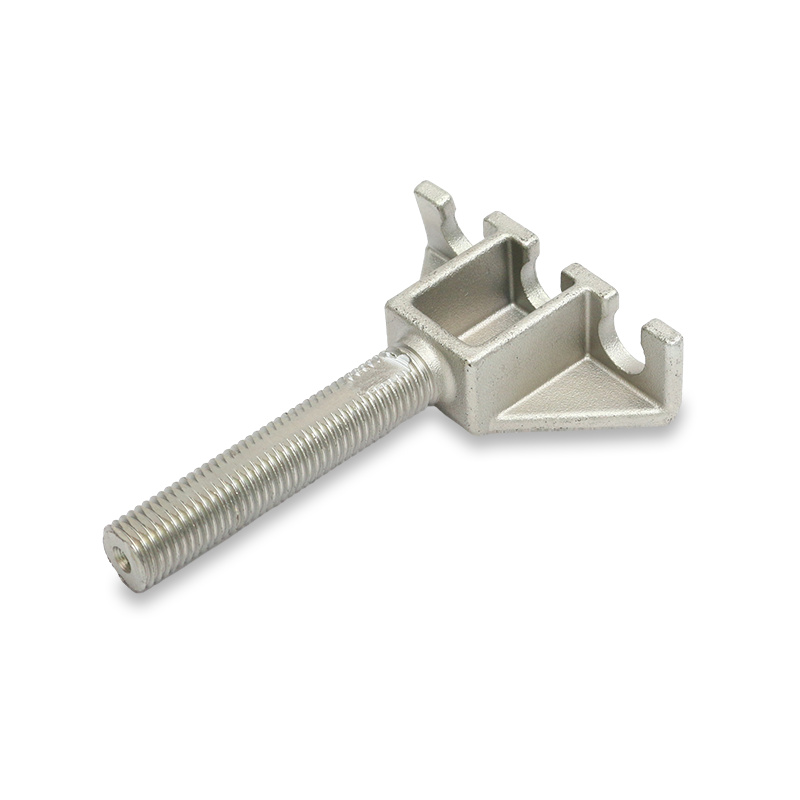




 Download Catalog
